
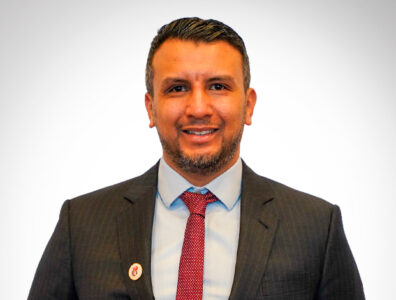
Ehab Mukhtar, CEO of PetroGas, talks to The Energy Year about the company’s technology-focused portfolio and opportunities emerging from Libya’s new energy investment cycle.
PetroGas is an energy services company providing local technical capabilities, technology solutions and project support to international equipment manufacturers and operators across the country.
- Libya’s new investment cycle is creating opportunities across upstream, offshore gas, gas processing and drilling services, with PetroGas positioning its technology portfolio to support new infrastructure and asset development.
- PetroGas differentiates itself by combining international OEM technologies with local engineering, logistics and technical capabilities, allowing partners and operators to maintain support across Libya’s geographically dispersed and operationally challenging energy sector.
- The company aims to move from supporting OEMs towards managing larger contracts and entire assets while expanding capabilities in decarbonisation, including methane mitigation, flare monitoring and potential gas-utilisation solutions.
How has PetroGas positioned itself in Libya’s energy sector?
PetroGas highlights the possibilities for private business in a country where the energy sector is run mainly by the state. Energy service companies bridge the gap between international capabilities and what clients require locally to execute important projects. They also provide local, in-house capabilities to operate across the country.
Libya has a large geographic spread, with oilfields extending from east to west and south. It is the third largest country in Africa, so local companies play an important role in understanding the pool of expertise and capabilities in different areas and managing logistics. PetroGas developed its network on the ground to manoeuvre between different fields and regions and understand what international companies require to operate successfully.
We started in 2005, initially focusing mainly on power generation services. We built a relationship with GE Oil & Gas, which today is Baker Hughes, offering the local capabilities required to meet the standards it expects globally. After going through its compliance and KYC processes, we signed an agreement in 2007 and have worked with the company since then, including promoting and marketing its technologies and products.
Where is PetroGas focusing its technology portfolio?
When I took the leading role, we looked at the expertise we had developed and tried to establish a unique portfolio that would interest international companies. We saw a technical advantage in niche areas, so our portfolio became heavily technology focused.
That includes monitoring systems that examine how assets are behaving and help customers understand when critical maintenance is needed, as well as technologies that assess how a gas turbine is running and help optimise it. You need technical people and engineers who can both bring those technologies to clients and work with original equipment manufacturers (OEMs) to understand exactly what clients require.
We therefore focused on promoting technology. Oil and gas is not necessarily at the frontier of new technology, but it is very good at adapting technology for remote, difficult and harsh environments.
We have built the company around five main portfolios, including digital, power generation, decarbonisation, maritime services, and flow and process solutions. Decarbonisation includes supporting clients with flare mitigation, while flow and process covers areas such as control valves, safety valves and filtration systems used in power and desalination plants. We have structured our organisation to develop the sales, technical and project capabilities required around these areas.
What opportunities will Libya’s new investment cycle create?
2026 has been transformational, and the country is pushing several major developments. Earlier in the year, Waha Oil Company signed a landmark 25-year development agreement with TotalEnergies and ConocoPhillips worth more than USD 20 billion in total foreign-financed investment, extending concessions through 2050. This will bring in more than 100,000 barrels of oil production, alongside gas.
There is also the offshore gas development by Mellitah Oil & Gas, the joint venture between Eni and the National Oil Corporation. These developments reaffirm that Libya understands global needs and commercial conditions have changed. The country is trying to update its production-sharing agreements and create more of a win-win situation that encourages foreign direct investment.
For PetroGas, these projects create opportunities to help develop new infrastructure and introduce technology. Offshore, we also expect expansion works requiring new technologies. There will be opportunities in Gas Processing and Utilisation facilities that will be handling different gas elements as new fields come online.
There are also new exploration rounds following the one earlier in 2026. Delivering drilling equipment and bringing more rigs into Libya should create considerable opportunities for onshore and offshore service activities. As these projects are structured and eventually come online, there is something there for everyone.
How should investors approach Libya’s operating risks?
There is an element of risk involved in operating in Libya, as there is across the continent. Oil and gas itself is already a challenging industry because of its safety requirements and hazards. When you add external risks, companies need to consider how to build a robust structure and what technologies and services can mitigate them.
This is something we have had to learn about since 2011, rather than only recently. Today, companies are coming to Libya proposing solutions that can mitigate the possibility of drone attacks. There is not much that can be done when force majeure is called and operations need to stop, but what reassures international companies is Libya’s ability to maintain production or bring it back online relatively quickly.
Part of that comes from infrastructure that was well built in the legacy era. It is therefore in our interest as a service company that the National Oil Corporation maintains that industry standard when infrastructure is upgraded. The system needs to absorb future challenges and allow production to be rerouted when necessary.
Libya is a long-term investment. Companies need a robust strategy built around being here for the long run rather than approaching the market as a quick transactional process.
What are PetroGas’s priorities for its next phase of growth?
Localisation remains extremely important. Most of our technology solutions apply to projects that can take two to three years to come online, so you need the right deal structure, strategy and team. Investing in local people means that when conditions allow operations to resume, we are already in Libya and can be among the first to send people where they are needed.
Covid demonstrated the value of that approach. Because we had a local technical team, we could continue supporting a client in the field with power generation requirements from their gas turbines. Working remotely with our international partners, we had enough technical capability to complete the major overhaul inspection and bring the unit online so production could continue.
Looking forward, one area where we are investing is decarbonisation – including methane mitigation and monitoring, reporting and verification of flared gas. We are talking with expertise from the region and elsewhere about solutions that work for Libya. There are also opportunities around biofuels and policy changes that could encourage investment in capturing flared gas and selling it locally or to international offtakers.
At the same time, we want to deepen our capabilities with OEM partners such as Baker Hughes in power generation and rotating equipment through the availability broader technical services. The ambition is for PetroGas to take on larger contracts and look after entire assets rather than remaining in the background supporting the OEM.
source: The Energy Year